The right retirement condo in Cebu is one you can still use easily if your mobility, eyesight or health changes: a step-free route from the car to your door, enough lifts that keep running in a power outage, a short and predictable route to a hospital emergency room, daily errands within reach, and a building that is well managed. Those features are about the building and its location more than the unit, and the trade-off is that the buildings that offer them are often in busier, pricier central areas, while quieter resort-style projects can mean longer trips for medical care and shopping. Foreign retirees can own a unit within the foreign-ownership limit and may qualify for the PRA’s Special Resident Retiree’s Visa.
Key points
- Walk the whole route — drop-off, lobby, lift, corridor, unit, bathroom — before you buy. Brochures rarely show steps and thresholds.
- Ask how many passenger lifts serve your tower, whether they run on backup power, and what happens when one is under maintenance.
- Map the route to the nearest hospital with an emergency room and drive it at the hours you would need it.
- A ready-for-occupancy building lets you judge management, lifts and noise in person; a pre-selling unit asks you to trust a plan.
Step-free access, from the street to the shower
Developers rarely publish accessibility details, and we do not assume any project has them. Check each point yourself:
- Drop-off: a covered drop-off at the lobby, level with the entrance, where a car or taxi can stop safely.
- Lobby and amenities: ramps beside any steps, automatic or easy-opening doors, and a step-free route to the pool deck, mailroom and parking.
- Lifts to every level you use: including the parking floors and the amenity deck. Some buildings need a stair or a separate lift between parking and lobby.
- Inside the unit: door widths, raised thresholds at the bathroom and balcony, a shower without a step or ledge, and walls strong enough to fix grab bars later.
- Hardware: lever-type handles are easier with a weak grip than round knobs. Taft Properties, for example, lists lever-type door handles among the features handed over at Horizons 101.
Low-rise “walk-up” buildings deserve a specific warning. PrimaryHomes describes Brentwood in Basak, Lapu-Lapu, as three-floor walk-up condominiums: pleasant and low-density, but an upper-floor unit means stairs every day. If you choose a walk-up, choose the ground floor.
Lifts: count, capacity and what happens when they stop
A lift outage is an inconvenience for most residents and a real problem for someone who cannot manage stairs. Floor plans and developer pages give some clues — the Mandtra Residences Tower 1 floor plan on our page marks two 13-person passenger lifts and an 18-person passenger/service lift serving 22 units on that floor; PrimaryHomes lists two elevators per building at Royal Oceancrest Mactan — but reliability is never on a brochure. Ask the developer or the property manager, in writing:
- How many passenger lifts serve this tower, and how many units do they serve in total?
- Is there a lift large enough to carry a stretcher or a wheelchair with a companion?
- Do the lifts run on the standby generator during a power outage, and for how long?
- Who maintains the lifts, how quickly are breakdowns attended to, and how is a resident who cannot use stairs helped if all lifts are down?
- How is residents’ lift access managed during renovations and move-ins?
In a finished building, ask residents and the guards how often lifts are out of service. Their answer is worth more than any specification.
Emergency procedures
- Medical emergencies: Is there a 24-hour guard or administration desk that will call an ambulance and meet it at the lobby? Can an ambulance reach the entrance directly?
- Fire evacuation: How does the building plan to evacuate residents who cannot use the stairs? Are drills held? Lower floors are easier to evacuate from; ask whether units near the fire exits are available.
- Power and water: Does backup power cover lifts, corridor lighting and water pumps — and any power outlets inside units, or only common areas? Ask the same about water storage.
- Contacts: Will management keep an emergency contact on file for residents who live alone, and is there a way to alert the guard from inside the unit?
Hospital access: know your route before you need it
Metro Cebu’s major hospitals are concentrated in a few areas. We confirmed these addresses on the hospitals’ own websites or official pages:
| Hospital | Area | Type |
|---|---|---|
| Chong Hua Hospital | Don Mariano Cui St. cor. J. Llorente St., Capitol Site, Cebu City | Private |
| Cebu Doctors’ University Hospital | Osmeña Boulevard, Capitol Site, Cebu City | Private |
| Vicente Sotto Memorial Medical Center | B. Rodriguez St., Sambag II, Cebu City | Government (DOH) |
| Perpetual Succour Hospital | Gorordo Avenue, Lahug, Cebu City | Private |
| Chong Hua Hospital Mandaue | Mantawi International Drive, Mandaue City | Private |
| University of Cebu Medical Center (UCMed) | Ouano Avenue, Mandaue City | Private |
| Mactan Doctors’ Hospital | M.V. Patalinghug Jr. Avenue, Basak, Lapu-Lapu City | Private |
Addresses as published by each hospital, checked 5 October 2026. Confirm which hospital your doctor practises in and which accepts your health insurance.
Straight-line distance is only a starting point — the road route is longer and Cebu traffic varies sharply by hour and by day. Before you buy, drive from the building to the emergency entrance on a weekday morning and evening, and check whether a bridge, a single access road or a frequently flooded street sits in between. If you live on Mactan, note which hospitals are on the island and which require crossing a bridge to Mandaue or Cebu City.
Daily errands, noise and the feel of the neighbourhood
Independence in retirement often comes down to whether you can buy groceries and medicine, see a doctor for a routine visit, attend church, and reach a bank without arranging a car. A supermarket, pharmacy or clinic in the building’s podium or across a crossable street changes daily life far more than a sky lounge. Walk the area yourself: check that the sidewalk is continuous, shaded and level, and where taxis and ride-hailing cars can stop.
Noise matters more when you are home most of the day. Ask what is planned on neighbouring lots; listen at your unit’s floor during the day and at night; and look at what is directly below — a pool deck, function room, garbage room or main road. Units next to the lift lobby are the shortest walk but hear every arrival.
Recurring costs on a fixed income
Once the unit is paid for, the costs that remain are the ones that rise over time:
- Association dues, usually charged per square metre each month. At an assumed ₱90 per sqm, a 35 sqm one-bedroom would pay about ₱3,150 a month, or ₱37,800 a year. Ask the developer for the estimate and the building’s history of increases.
- Special assessments for major repairs, if the condominium corporation’s reserves fall short. Ask whether a reserve fund exists and how large it is.
- Real property tax, billed yearly by the city on the unit’s assessed value.
- Utilities, internet and insurance — including air-conditioning, which you will use more if you are home all day.
- Parking, if you keep a car, and dues on the slot.
Building management
A retiree depends on the building’s management every day. Before buying, find out:
- Who manages the property now, and when management passes from the developer to the condominium corporation.
- Whether the corporation publishes audited financial statements to owners, and how dues are spent.
- The house rules that will shape your life: caregivers and helpers staying in the unit, visitor and delivery access, pets, renovation hours and noise.
- Whether staff are on site 24 hours, and who answers when something breaks at night.
For foreign retirees: ownership and the SRRV
Ownership. Under the Condominium Act (RA 4726, Section 5), a condominium unit can be sold to a foreigner as long as the transfer does not push foreign ownership in the condominium corporation past the limit set by law. Ask the developer to confirm in writing how much foreign quota remains.
The Special Resident Retiree’s Visa (SRRV). The Philippine Retirement Authority’s official page currently lists two options — SRRV Classic and SRRV Courtesy — for principal applicants aged 40 and above. For SRRV Classic, the visa deposit is:
| Applicant | Age 50 and above | Age 40–49 |
|---|---|---|
| With pension | US$15,000 | US$25,000 |
| Without pension | US$30,000 | US$50,000 |
Source: pra.gov.ph/SRRVisa, accessed 5 October 2026. Pensioners must show a lifetime pension of at least US$800 a month (single) or US$1,000 (with dependents). PRA also lists a US$1,500 processing fee and a US$360 annual fee for a principal with up to two dependents. SRRV Courtesy, for groups such as former Filipinos and retired diplomats, has lower deposits.
PRA’s published checklist allows the SRRV Classic deposit to be converted into a condominium unit if the title is in the principal retiree’s name and the property is worth at least US$50,000 in peso terms. The title then carries an annotation that any sale, transfer or mortgage requires PRA approval, and converting into an existing unit is allowed only 30 days after the visa is issued. PRA inspects the property before it releases the deposit. If you intend to use the deposit this way, ask PRA for the current checklist before you reserve — the timing has to work with the developer’s payment schedule.
Three buildings that show what to look for
These are examples of the questions above, not endorsements of accessibility. Prices are listed-from figures on our project pages as of 3 October 2026.
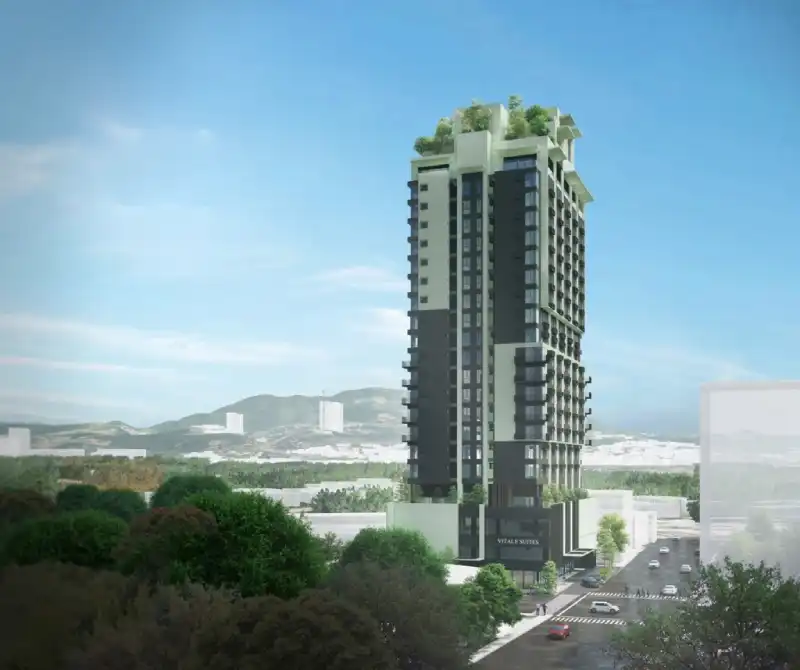
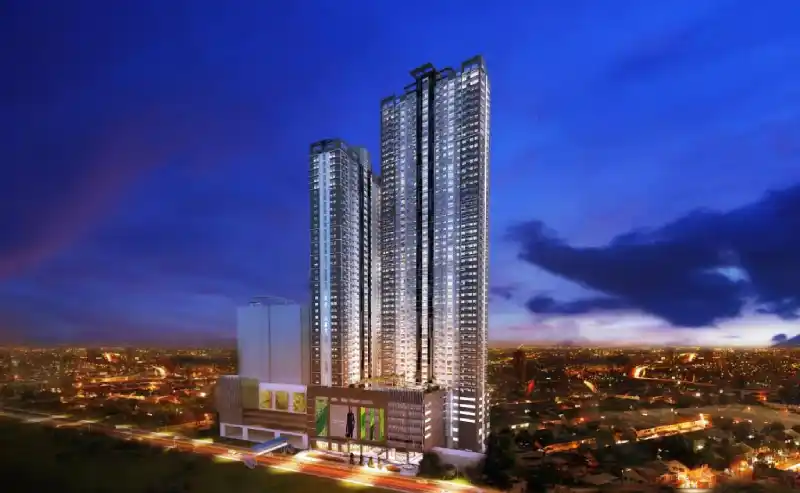
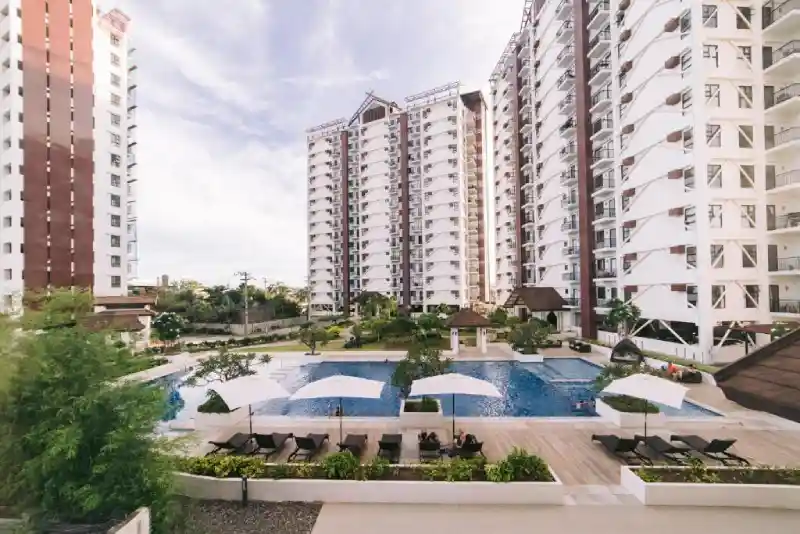
Distances above are straight lines between OpenStreetMap coordinates, computed 5 October 2026 — not road distances or travel times.
Frequently asked questions
Can a foreign retiree own a condo unit in Cebu?
Yes, a foreigner can buy a condominium unit, provided the sale does not push foreign ownership in the condominium corporation beyond the limit set by law (Republic Act 4726, Section 5). Ask the developer or condominium corporation to confirm in writing how much of the foreign quota remains in the building before you reserve.
How much is the PRA retiree visa deposit?
For the SRRV Classic, PRA’s official page lists a visa deposit of US$15,000 (with pension) or US$30,000 (without pension) for applicants aged 50 and above, and US$25,000 or US$50,000 for ages 40–49. Pensioners must show a lifetime pension of at least US$800 a month (single) or US$1,000 (with dependents). Rules change, so confirm on pra.gov.ph before applying.
Can the SRRV deposit be used to buy a condo?
Under PRA’s published checklist, the SRRV Classic visa deposit may be converted into a condominium unit if the title is in the principal retiree’s name and the property is worth at least US$50,000 in peso terms. The title is annotated so that any sale, transfer or mortgage needs PRA approval, and conversion into an existing unit is allowed only 30 days after the visa is issued.
Does any Cebu condo have wheelchair-accessible units?
Some developers now announce them. Worldwide Central Properties said in January 2024 that Vitale Suites in Mandaue would include 36 wheelchair-friendly units on the seventh and eighth floors, with features such as lowered kitchen cabinets. Treat any such feature as a claim to inspect: measure doors, thresholds and the bathroom yourself, or with an occupational therapist, before you buy.
Shortlist buildings you can actually live in later
Tell us where you want to be and what matters most — a hospital nearby, no stairs, a quiet unit. We will shortlist buildings, request the lift, backup-power and house-rule details from each developer in writing, and arrange viewings of finished units where possible.
Ask for a retirement shortlist WhatsApp +63 917 550 8229Sources and notes
- Philippine Retirement Authority — Special Resident Retiree’s Visa — SRRV Classic and Courtesy options, deposits by age and pension, US$1,500 processing fee, US$360 annual fee for principal plus two dependents; accessed 5 October 2026
- PRA — Conversion of visa deposit into a condominium unit (PRA-SD-FORM-0003, Oct 2022) — US$50,000 minimum value, title in principal’s name, PRA annotation on the CCT, 30-day rule for existing units
- Republic Act No. 4726 (Condominium Act), Section 5 — transfers to foreigners may not cause alien interest in the condominium corporation to exceed the limits imposed by law
- SunStar Cebu — ‘Singapore-inspired living’ in Mandaue City (31 Jan 2024) — Vitale Suites: Worldwide Central Properties with The Ascott; 36 accessible units on floors 7–8; completion scheduled 2027
- Developer pages — PrimaryHomes (Royal Oceancrest Mactan, Brentwood) and Taft Properties (Horizons 101) — Royal Oceancrest: ready for occupancy, two elevators per building, standby generator; Brentwood: three-floor walk-up (https://primaryhomes.com/projects/brentwood); Horizons 101: lever-type door handles at handover (https://taftproperties.com.ph/project/horizons-101); accessed 5 October 2026
- Hospital addresses — Chong Hua Hospital and Chong Hua Hospital Mandaue (official site); Cebu Doctors’ University Hospital and Mactan Doctors’ Hospital (cebudocgroup.com.ph); Perpetual Succour Hospital (perpetualsuccourcebu.com); Vicente Sotto Memorial Medical Center (vsmmc.doh.gov.ph); UCMed (ucmed.ph); locations cross-checked on OpenStreetMap, 5 October 2026
- Distances and assumptions — distances are straight lines between OpenStreetMap coordinates computed on 5 October 2026, not road distances or travel times; dues rates are assumptions for illustration