
Most Cebu condo purchases from a developer are paid in three parts: a reservation fee that holds the unit, an equity or down payment (usually 10–20% of the price, paid in one lump or spread over months), and the balance, due at turnover and paid in cash or through a bank, Pag-IBIG or developer financing. On top come “other charges” and, above the VAT threshold, VAT. The trade-off: long, low equity instalments make it easy to start, but they hide the much larger payment that begins when the balance is financed.
Key points
- The advertised monthly figure is usually the equity instalment only, not what you will pay after turnover.
- The balance — often 80–90% of the price — is the big decision. Plan how you will pay it before you reserve.
- Check whether VAT and other charges are inside the total contract price or added to it.
- In our illustration, a ₱9,167 monthly equity becomes a ₱24,422 loan payment after turnover.
The three stages of payment
| Stage | What it is | Paid to |
|---|---|---|
| Reservation fee | Holds a specific unit and price for a limited period; usually credited to the equity; often non-refundable. | Developer |
| Equity or down payment | Commonly 10–20% of the price. Paid as a spot lump sum, as monthly instalments, or a mix. | Developer |
| Balance | The rest of the price, due at or near turnover (pre-selling) or soon after the down payment (ready units). | Developer, through your bank, Pag-IBIG, in-house financing or cash |
On our project pages as of 3 October 2026, most Cebu projects ask for 10–20% equity, spread over anything from about five months to 78 months, with the rest due at turnover; a few luxury projects ask for 30% or more before turnover. Developer terms change, so treat these as examples rather than current offers.
Equity: spot, spread or a mix
- Spread (staggered) equity: the equity divided into equal monthly instalments, usually over the construction period. Lowest monthly outlay, but you pay it for years before you can use the unit.
- Spot down payment: the equity paid in one lump sum soon after reservation. Some developers offer a discount for this; ask for both computations and compare.
- Mixed terms: for example, part of the equity as a spot payment and the rest spread out, or the equity split into two blocks of months. Several Cebu projects on our pages use this structure.
- Full or deferred cash: the whole price paid upfront or over a short period without a loan. Developers often price these options differently; the computation sheet shows the discount, if any.
Developers usually collect instalments through post-dated cheques or auto-debit. Late payment carries penalties set in the contract; ask for the rate.
The balance: how it gets paid
The balance is the largest amount and the one most buyers finance:
- Bank loan: typically the lowest rates, but approval is not automatic and the loan is based on the bank’s appraisal. For pre-selling units, the bank assesses you near turnover. See our bank financing guide.
- Pag-IBIG Fund: available to members who meet its savings and age rules, for projects accredited for Pag-IBIG takeout; the loan is released once the unit is complete and titled. Confirm the project qualifies.
- In-house financing: the developer finances the balance itself. Easier to get, but rates are set by each developer and are generally higher than bank rates, with shorter terms.
- Cash: paid in full at turnover.
Other charges and VAT
Other charges (also called miscellaneous fees) are what developers bill for the costs of transferring the unit to you — typically transfer tax, registration fees, documentary stamp tax and title processing. Each developer sets its own percentage and timing: some collect them with the equity, others at turnover, and some fold them into the total contract price. BIR’s Revenue Memorandum Circular No. 31-2025 confirms that transfer, processing, miscellaneous and registration fees billed by developers are subject to 12% VAT.
VAT on the price: the sale of a house and lot or other residential dwelling is VAT-exempt if the selling price does not exceed ₱3,600,000, the threshold set by BIR Revenue Regulations No. 1-2024 from 1 January 2024 (it is adjusted every three years for inflation). Above the threshold, a developer’s sale is subject to 12% VAT. Condominium units are generally treated as residential dwellings under this rule; check whether your computation shows the price as VAT-inclusive, VAT-exclusive or exempt. Resale purchases from individual owners are taxed differently — see our buying guide.
Is VAT included in the total contract price? Are other charges included, and if not, how much are they, what do they cover and when are they due? Is parking priced separately? What move-in fees and advance association dues are collected at turnover?
One reconciled schedule (illustration)
To show how the pieces add up, here is a schedule built on the terms listed for a studio at Casa Mira Mandaue. The price and terms come from our project page; the other charges, move-in costs and loan rates are assumptions.
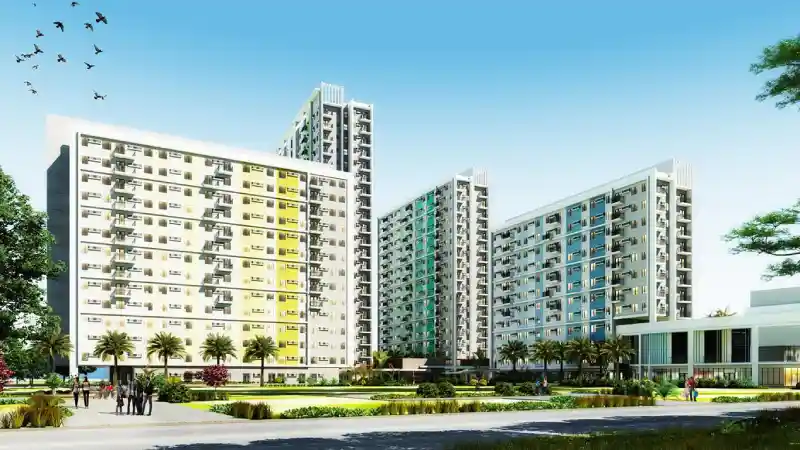
Total contract price ₱3,500,000, treated as VAT-exempt because it is below the ₱3.6M threshold. Reservation fee ₱20,000, credited to a 10% equity of ₱350,000. The remaining ₱330,000 is paid over 36 months. The 90% balance is paid at turnover with a bank loan. Other charges are assumed at 5% of the price, billed separately at turnover, plus ₱20,000 of move-in fees and advance dues.
| When | Item | Amount |
|---|---|---|
| Reservation | Reservation fee (credited to equity) | ₱20,000 |
| Months 1–36 | Equity: 35 × ₱9,166.67 + 1 × ₱9,166.55 | ₱330,000 |
| Equity paid (10%) | ₱350,000 | |
| Turnover | Balance (90%), paid by the bank loan | ₱3,150,000 |
| Total contract price | ₱3,500,000 | |
| Turnover | Other charges (assumed 5%) | ₱175,000 |
| Turnover | Move-in fees and advance dues (assumed) | ₱20,000 |
| Cash you pay before the loan takes over (₱350,000 + ₱175,000 + ₱20,000) | ₱545,000 |
Loan fees, insurance and any shortfall if the bank appraises the unit below the price would add to the cash needed at turnover.
The jump after turnover
During construction this buyer pays ₱9,167 a month. Once the ₱3,150,000 balance is financed, the monthly principal-and-interest payment depends on the rate and term:
| Financing (assumed) | Monthly payment | vs. equity instalment |
|---|---|---|
| Bank, 6.5%, 20 years | ₱23,486 | 2.6× |
| Bank, 7.0%, 20 years | ₱24,422 | 2.7× |
| Bank, 8.0%, 20 years | ₱26,348 | 2.9× |
| Bank, 7.0%, 15 years | ₱28,313 | 3.1× |
| In-house, 12.0%, 10 years | ₱45,193 | 4.9× |
Excludes association dues, mortgage redemption and fire insurance, and real property tax, which start at turnover. In-house rates and terms vary by developer; 12% for 10 years is an assumption for comparison only.
The test before you reserve is not whether you can afford the equity instalment, but whether you could carry the post-turnover payment — plus dues — on the income you expect at that time, with a margin for a higher rate.
How to compare payment terms between projects
- Compare the total contract price and price per square metre, not the monthly equity.
- Note the equity percentage and the number of months, and work out the balance due at turnover.
- Ask which charges sit outside the price — other charges, VAT, parking, move-in fees — and when each is due.
- Calculate the loan payment on the balance at two or three rates, using the mortgage calculator.
- Check the penalty for late equity payments and what the contract allows if your loan is delayed or reduced.
- Remember the Maceda Law lets you prepay any instalment or the full balance at any time without interest, if your cash position improves.
Frequently asked questions
What is the difference between spot and spread down payment?
A spot down payment is paid in one lump sum, usually soon after reservation; a spread (or staggered) down payment is divided into monthly instalments over a set period, often during construction. Some developers give a discount for spot payment. Ask for a computation of both and compare the total you would pay and when.
Is VAT included in the condo price?
It depends on the price and the developer’s computation. Sales of residential dwellings at or below ₱3,600,000 are VAT-exempt under the threshold set by BIR Revenue Regulations No. 1-2024; above that, 12% VAT applies to sales by developers. Developers also apply 12% VAT to miscellaneous and transfer fees they bill. Your computation sheet should show whether VAT is included or added.
What are “other charges” or miscellaneous fees?
They are amounts developers bill on top of, or inside, the total contract price to cover costs such as transfer tax, registration, documentary stamp tax and title processing. The percentage and timing differ by developer — some collect them with the equity, others at turnover. Ask for the amount, what it covers and when it is due.
Why does my monthly payment go up after turnover?
During construction you usually pay only the equity — often 10–20% of the price — spread over several years. At turnover the much larger balance falls due, and if you finance it the loan amortization can be several times the monthly equity — about 2.6 to 3.1 times in our illustration with a bank loan — plus association dues and insurance. Budget for the post-turnover payment before you reserve.
Get a dated computation for the unit you want
Send us the project and unit. We will send the developer’s current computation — reservation, equity schedule, other charges and balance — plus a range of monthly loan payments after turnover.
Request a computation WhatsApp +63 917 550 8229Sources and notes
- Grant Thornton Philippines — VAT-exempt threshold for sale of house and lot and other residential dwellings increased to ₱3.6M — summary of BIR Revenue Regulations No. 1-2024 (issued 15 January 2024): threshold raised from ₱3,199,200 to ₱3,600,000 effective 1 January 2024; adjusted every three years using the CPI
- BIR — Revenue Memorandum Circular No. 31-2025 (digest) — issued 7 April 2025: transfer, processing, miscellaneous and registration fees billed by real estate dealers are subject to 12% VAT; loan proceeds released to the seller are subject to output VAT
- Republic Act No. 6552 (Maceda Law) — LawPhil — rights of instalment buyers who default; right to prepay without interest
- Project data — listed price and terms for Casa Mira Mandaue and the payment-term ranges are from our project pages as of 3 October 2026; developer price lists change
- Illustration — the schedule is hypothetical; other charges, move-in costs, interest rates and loan terms are assumptions, not quotes. Loan payments use the standard amortization formula; recomputed on 3 October 2026