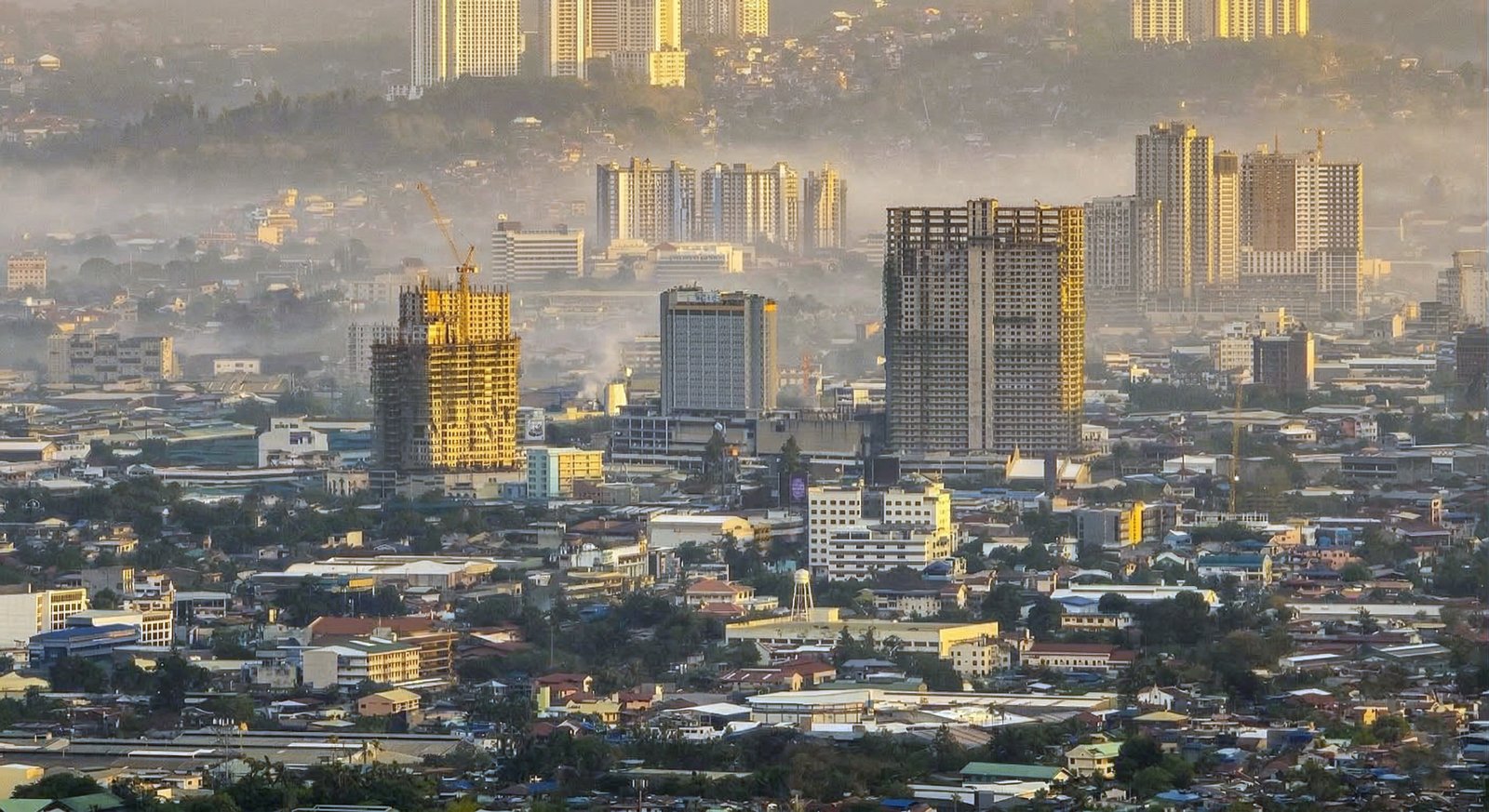
As of October 2026, the public evidence on the Cebu property market is mixed and thinner than most commentary suggests. The Bangko Sentral ng Pilipinas (BSP) price index for Metro Cebu was flat year on year in the second quarter of 2026 after strong growth, the number of bank housing loans fell, a large condominium pipeline is due in the Visayas and Mindanao, and the BSP has been raising its policy rate since April. We have not found a published forecast for Cebu residential prices that we could cite responsibly, so this guide reads four signals instead of predicting one. The trade-off: area-level data tells you the climate you are buying into, not whether a particular unit is fairly priced.
Key points
- Prices: BSP index, Metro Cebu, all residential types, bank-financed — −0.2% year on year in Q2 2026, after +9.4% in Q1 2026.
- Lending: 635 bank housing loans for Metro Cebu properties in Q2 2026, 8.1% fewer than a year earlier.
- Supply: Colliers reported (July 2026) that Cebu and Davao account for more than 60% of about 45,000 condo units expected in the Visayas and Mindanao in 2026–2029.
- Rates: the BSP policy rate went from 4.25% (February 2026) to 5.00% (August 2026).
- None of these tells you what a specific project will be worth at turnover.
Signal 1: prices — what the BSP index shows
The BSP's Residential Property Price Index (RPPI) is the only official, transaction-based measure of Philippine home prices. It tracks the quality-adjusted acquisition cost of homes bought with bank housing loans, and it has a separate sub-index for Metro Cebu (Cebu, Mandaue, Lapu-Lapu, Talisay, Naga, Carcar and Danao cities, plus six neighbouring towns).
| BSP RPPI, Metro Cebu, all residential types | Q2 2025 | Q3 2025 | Q4 2025 | Q1 2026 | Q2 2026 |
|---|---|---|---|---|---|
| Change from a year earlier | +11.5% | +3.8% | +7.0% | +9.4% | −0.2% |
| Change from the previous quarter | — | −8.0% | +4.6% | +1.3% | +2.4% |
Sources: BSP RPPI Reports for Q4 2025 and Q2 2026. For comparison, in Q2 2026 the national index rose 0.4% year on year, Metro Manila (NCR) 5.2%, and all areas outside Metro Manila combined fell 2.7%.
Why the Metro Cebu index jumps around
- It is a small sample. Banks reported 635 housing loans for Metro Cebu properties in Q2 2026, out of 9,655 nationwide. In the BSP's own example of 2024 weights, Metro Cebu condominiums and houses together carried about 5.5% of the national index.
- It leaves out many purchases. Cash buyers, developer in-house financing and other non-bank purchases are not covered, and neither is socialized housing.
- It mixes condos and houses. The quarterly report publishes Metro Cebu for all residential types combined. Condominiums are shown separately only for Metro Manila and for all areas outside it.
Read it as one dated signal about bank-financed buying across the metro area. For comparing actual units, use price per square metre on dated price lists — see how to compare Cebu condo prices.
Signal 2: supply — how much is coming, and where it competes
According to Insider PH's report of Colliers' July 2026 Visayas–Mindanao study, Cebu remains the largest condominium market outside Metro Manila, and Cebu and Davao together account for more than 60% of roughly 45,000 condo units expected to be completed across the Visayas and Mindanao from 2026 to 2029. Our own tracking points the same way: of the 42 Metro Cebu projects in our July 2026 price index, 34 were pre-selling.
We have not found a published, dated vacancy or unsold-inventory figure for Cebu condominiums. That gap matters, because supply affects you at building level more than at city level:
- How much of the project is sold, and how much will the developer still be selling when you take turnover?
- How many units in the same building are likely to be offered for resale or lease at the same time as yours?
- Which nearby projects are completing within a year or two of your turnover date?
Metro Manila's condominium market is a different story — Colliers reported high vacancy there at the end of 2025. If you are weighing the two, see Manila or Cebu for an OFW condo purchase, which reads the same BSP data for both.
Signal 3: demand — who buys and rents
There is no single official measure of housing demand for Cebu. The indicators below are partial, and each has a different geography:
| Indicator | Latest figure | Scope and caveat |
|---|---|---|
| Office vacancy (Colliers, as reported July 2026) | Metro Cebu about 16%; Cebu IT Park 13%; Cebu Business Park 12% | Office space, not housing — a rough gauge of the employers whose staff rent nearby |
| Mactan–Cebu International Airport passengers | 11.6 million in 2025, up from 11.3 million in 2024 | Reported by the operator; relevant to tourism and short-stay demand, not long-term tenancy |
| Overseas Filipino cash remittances (BSP) | US$35.6 billion in 2025 (preliminary), +3.3%; January–July 2026 +2.3% year on year | National figures; no official breakdown by home province |
| IT-BPM workforce in Cebu | No official count found | Figures quoted online vary widely and are rarely sourced |
For rents themselves, see our Cebu rental market guide, which explains asking rents and lease rules, and what the BPO workforce means for condo demand.
Signal 4: interest rates — the cost of the loan you will need
After cutting its policy rate to 4.25% in February 2026, the BSP raised it to 4.50% in April, 4.75% in June and 5.00% in August 2026. In its August 2026 Monetary Policy Report it forecast average inflation of 6.1% for 2026, above its 2–4% target range. Bank housing-loan rates do not move one-for-one with the policy rate, but the direction matters for anyone who will borrow:
- RFO buyers borrow at today's rates; compare fixing periods and repricing terms across banks.
- Pre-selling buyers borrow at turnover, often years away. Test your budget at a rate one to two percentage points higher than today's quotes.
The bank financing guide shows how a rate change affects the monthly payment.
What the signals mean for different buyers
| Buyer | Signal that matters most | What to do with it |
|---|---|---|
| End-user buying a home | Rates and your own budget | Buy what you can carry at a higher rate; area price swings matter less if you plan to stay. |
| Investor planning to rent | Supply in the same building and district | Price your rent against units completing at the same time, not against brochure figures. |
| Buyer planning to resell at turnover | Prices and supply together | Assume you compete with the developer's unsold stock and other investors; do not rely on a pre-selling price increase as proof of resale value. |
| OFW buying from abroad | Rates, exchange rate and turnover timing | Plan the cash needed at turnover and who will manage the unit. |
What to watch next
- The BSP's next quarterly RPPI release (Q3 2026), to see whether the Q2 2026 flattening in Metro Cebu continued.
- The BSP Monetary Board's next scheduled meeting, on 22 October 2026, and what banks do with their housing-loan rates afterwards.
- Updated research-firm figures on Cebu condo completions, take-up and vacancy — check the date and scope of any number you read.
- For your shortlist: each project's sold percentage, turnover date and the price-list date on your computation.
If you want a framework for weighing those signals against a specific strategy, the Cebu real estate investment guide walks through costs and risks, and best areas to invest in Cebu compares districts.
Frequently asked questions
Are Cebu property prices going up or down in 2026?
On the official BSP Residential Property Price Index, Metro Cebu prices (all residential types, bought with bank loans) were 0.2% lower than a year earlier in Q2 2026, after rising 9.4% year on year in Q1 2026. Quarter on quarter they rose 2.4%. That describes bank-financed purchases across the metro area; it does not tell you how a particular project or unit type is priced.
Is there an oversupply of condos in Cebu?
We have not found a published, dated vacancy or unsold-inventory figure for Cebu condominiums from an official source. Colliers reported in July 2026 that Cebu and Davao account for more than 60% of about 45,000 condo units expected in the Visayas and Mindanao from 2026 to 2029. Supply matters most at building level, so ask how much of a project is sold, how many units owners are reselling or leasing, and what is completing nearby.
How do current interest rates affect someone buying in Cebu?
The BSP raised its policy rate three times between April and August 2026, to 5.00%, after cutting it to 4.25% in February. Bank housing-loan rates do not move one-for-one with the policy rate, but a rising-rate period means you should test your budget at a higher rate, especially for a pre-selling unit whose loan will only be priced at turnover.
Where can I find official Cebu property price data?
The BSP publishes the Residential Property Price Index every quarter, including a Metro Cebu sub-index and median prices for condominium units and houses, on its website (bsp.gov.ph, Residential Property Price Index page). Our Cebu Condo Price Index 2026 summarises developer list prices, which are asking prices rather than transactions.
Get a dated read on one specific project
Market-level data sets the context; your decision is about one building. Send us the project you are considering and we will put together a dated summary: the current price list and computation, the turnover date, and the other projects we carry in the same area that will be completing around the same time.
Ask about a project WhatsApp +63 917 550 8229Sources and notes
- BSP — Residential Property Price Index Report, Q2 2026 — Figures 1a–1b (price growth by area), 3a (number of loans granted), Table 1 (Metro Cebu coverage); released September 2026
- BSP — Residential Property Price Index Report, Q4 2025 — Figure 1b: Metro Cebu year-on-year change for Q3 and Q4 2025
- BSP — Technical Notes on the Hedonic Residential Property Price Index — coverage (bank-financed household purchases only), method and the 2024 stratum weights example (Table 2)
- Insider PH — report on Colliers' July 2026 Visayas–Mindanao property report — 6 July 2026; condominium pipeline 2026–2029 and Cebu office vacancy as reported; the Colliers report itself was not opened
- Daily Tribune — Aboitiz InfraCapital airport passenger figures — 25 January 2026; Mactan–Cebu International Airport 11.6 million passengers in 2025 vs 11.3 million in 2024
- BSP — Overseas Filipino cash remittances (Table 11) — 2025 preliminary total and January–July 2026; national figures
- BSP — Target reverse repurchase (policy) rate history — rate changes effective 20 February, 24 April, 19 June and 28 August 2026
- BSP — Monetary Policy Report, August 2026 — 27 August 2026 decision; 2026 average inflation forecast of 6.1%; inflation target 3.0% ± 1.0 percentage point