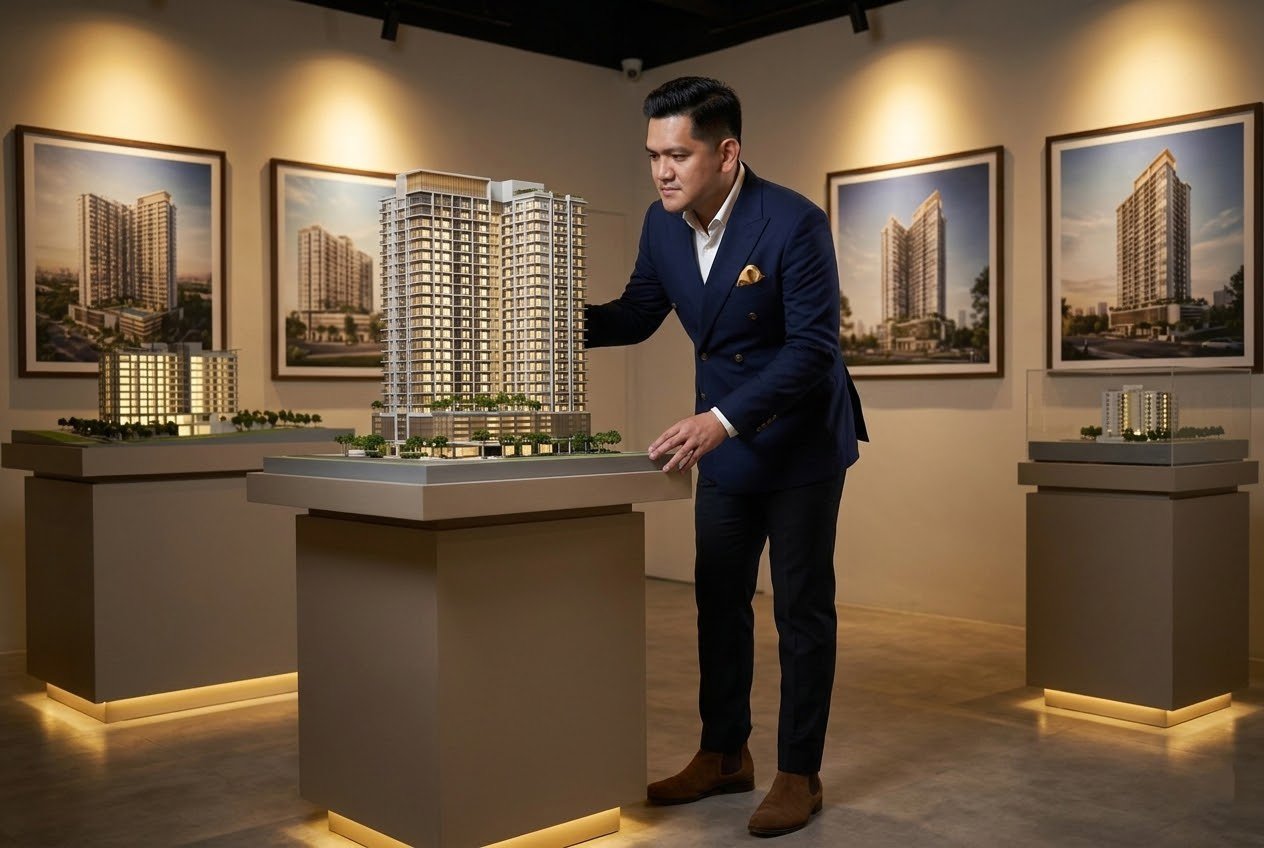
Paying more for quality in a condo is worth it when the extra money buys something you can verify and that a future tenant or buyer will also value: a usable layout with light and ventilation, reliable water and back-up power, enough elevators, durable finishes, sound waterproofing and well-run building management. It is much harder to justify a premium for design pedigree alone. There is no public Philippine data showing that a famous architect or a premium brand guarantees higher resale prices, and 2026 market data show location and local supply still shaping how units resell and rent. The trade-off is simple: pay for quality you can check, and be skeptical of quality you are only asked to believe.
Key points
- Separate verifiable features (specifications, layout, building systems, management) from claims you cannot test before buying.
- Compare units on interior area and running costs, not only on headline price per square meter.
- A named architect tells you the developer invested in design; it does not prove a resale premium.
- Get the turnover specifications in writing. Under PD 957, facilities promised in advertising are part of the developer’s warranties.
- Quality helps a unit compete, but it does not offset oversupply in its area.
What 2026 market data does and does not show
You may read that research firms describe a “flight to quality” in Philippine housing, with design-led projects holding their value. We could not find a published residential report that shows that. What the published data does show is that markets are uneven. Colliers Philippines’ fourth-quarter 2025 report, as covered by BusinessWorld in February 2026, put Metro Manila’s residential vacancy at 24.7% at the end of 2025 and projected a peak of around 25% in 2026. Of roughly 30,000 unsold ready-for-occupancy units, about 36% were in the ₱3.6M–₱6.99M bracket and 33% in the ₱2.5M–₱3.59M bracket. Vacancy in the fourth quarter ranged from 57.3% in the Bay Area to 6.4% in Ortigas Center. Colliers’ research head also noted that mid-income units which sold well as pre-selling are proving hard to resell or rent.
Two cautions. These figures are for Metro Manila, not Cebu or Davao, and they are cut by price bracket and district, not by build quality or design. They support a narrower point: where a unit sits, and how much similar stock competes with it, matters a great deal. Quality is one way a unit can stand out in a crowded market. It is not a substitute for checking that market.
Quality you can verify, and quality you are asked to trust
| Feature | Why it matters to an owner | How to check before you buy |
|---|---|---|
| Layout and interior area | Usable space, furniture fit, light and cross-ventilation | Floor plan with dimensions; ask whether the stated area includes the balcony |
| Water supply and pressure | Daily comfort; a common complaint in tall buildings | Ask about cistern capacity and pumps; test taps in a completed building by the same developer |
| Back-up power | Whether your unit or only the common areas run during outages | Ask in writing what the generator covers (lights, outlets, air-conditioning, elevators) |
| Elevators | Waiting times at busy hours; resilience when one is under maintenance | Number of elevators against the number of units and floors; visit at a busy hour if the building is finished |
| Finishes and fixtures | Fit-out cost and how fast the unit wears | Written turnover specification, item by item, annexed to the contract |
| Waterproofing and facade | Leaks are costly and disruptive to fix later | Look for stains and seepage in the developer’s older buildings; ask about defect-liability terms |
| Building management and dues | Running cost, upkeep and how disputes are handled | Current or projected dues per square meter; who manages the building; whether a reserve fund exists |
| Green certification | Possible savings on energy and water | Certificate level, design-stage or final, and the certifying body’s directory |
Claims that cannot be tested before purchase — “will appreciate faster”, “timeless design”, “sought-after address” — should carry little weight in the price you agree to.
Compare on interior area and running costs
A premium unit is often sold on its price per square meter. That figure can mislead in both directions, depending on what the stated area includes and what the building costs to run.
Unit A is listed at ₱4,500,000 for 30 sq m, of which 4 sq m is a balcony; association dues are assumed at ₱90 per sq m a month. Unit B, in a more expensive-looking building, is listed at ₱4,620,000 for 28 sq m with no balcony; dues are assumed at ₱110 per sq m.
| Measure | Unit A | Unit B |
|---|---|---|
| Price per stated sq m | ₱150,000 | ₱165,000 |
| Price per interior sq m | ₱173,077 | ₱165,000 |
| Association dues per month | ₱2,700 | ₱3,080 |
| Association dues per year | ₱32,400 | ₱36,960 |
On interior space, Unit B is about ₱8,077 per sq m cheaper despite the higher headline rate; Unit A costs ₱4,560 a year less in dues, or ₱45,600 over ten years if dues never rise. Which is better depends on whether you value the balcony and what Unit B’s higher dues pay for.
The point is not that one unit wins. It is that the comparison only becomes meaningful once you know what each price buys and what each building will cost you every month.
Named architects: what the attribution tells you
Developers increasingly name the design firm behind a project, and you can usually confirm the attribution on the developer’s or project’s official site. Destine Davao in Lanang, for example, is described on its official site as crafted in partnership with Royal Pineda Architect.
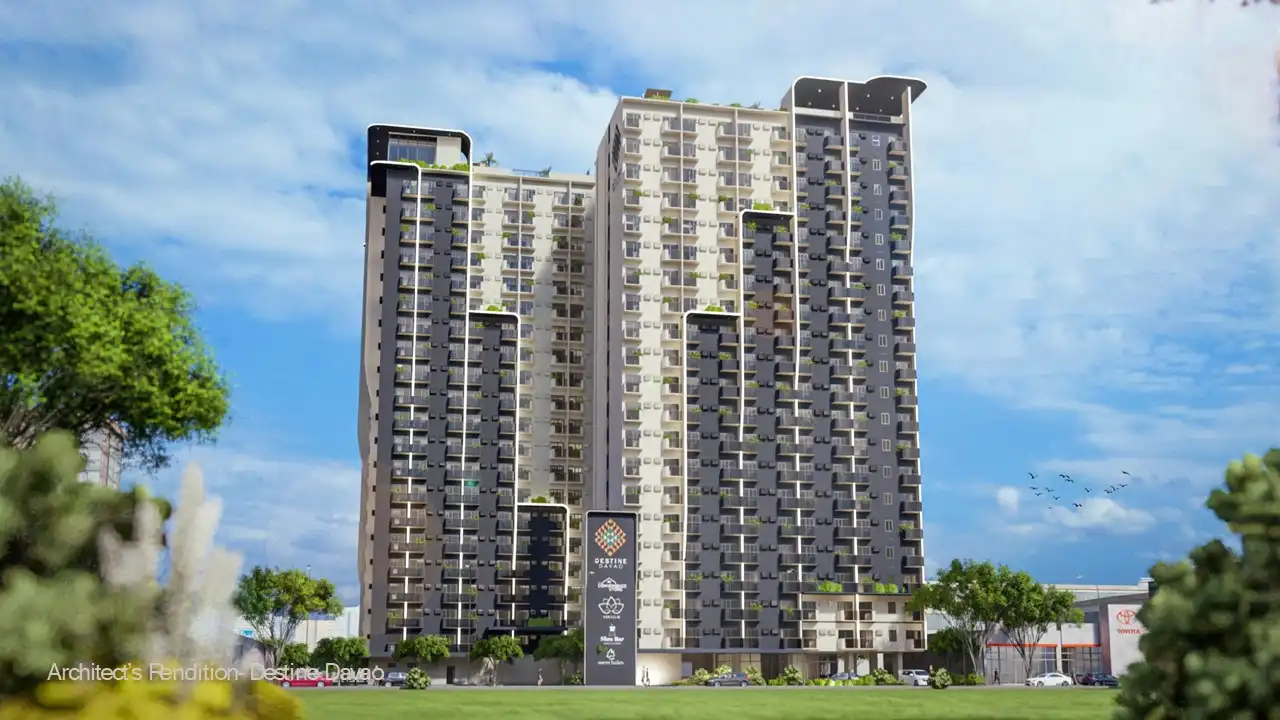
What a named firm can tell you: the developer paid for design attention, and you can look at the firm’s finished residential buildings to see how its work lives and ages. What it cannot tell you: that the unit will resell or rent for more. We found no public Philippine dataset tracking resale prices by architect, and individual high-profile examples are not enough to generalize from. Treat design as something to judge with your own eyes — the layout, the light, the materials, how the common areas work — rather than as a label that adds value on its own.
Position within the building and the block
Two units in the same project can differ more than two projects in the same district. Before paying a premium for a particular stack, floor or view, check:
- Whether the view could be blocked: ask what is planned on vacant or low-rise neighboring lots, and check the developer’s own master plan for later towers.
- Which way the unit faces, and how much afternoon sun the main rooms get.
- Noise from roads, amenity decks, mechanical rooms, garbage areas or the elevator core next to the unit.
- How much the price steps up per floor, and whether the higher floor buys a lasting difference.
How to decide what premium to pay
- List what the premium buys. Write down each feature that justifies the higher price, and mark which ones you have verified in writing or seen in a finished building.
- Price the alternatives. Estimate what it would cost to upgrade the cheaper unit’s finishes yourself; some gaps can be closed with fit-out, others — layout, elevators, water systems — cannot.
- Add running costs. Compare dues and likely utility costs over the years you expect to hold the unit.
- Check the developer. Specifications are only as good as the company delivering them — see our five questions to ask about a developer.
- Consider a ready unit. If quality is the main reason you are paying more, buying ready for occupancy lets you inspect it before you pay; our pre-selling vs RFO guide sets out the trade-offs.
Frequently asked questions
Do condos designed by well-known architects resell for more in the Philippines?
There is no public dataset that tracks Philippine condo resale prices by architect or design firm, so a general premium cannot be shown. A respected design firm can signal that the developer invested in design, but judge the result by what it does for you — layout, light, ventilation, durability and running costs — and by how the firm’s finished residential buildings have aged.
Is a higher price per square meter a sign of better quality?
Not by itself. The price per square meter depends on what the stated area includes, the location, the floor and view, and the specifications. Compare units on interior area, the written turnover specifications and the association dues before reading anything into the headline figure.
Which quality features matter most if I plan to rent the unit out?
The ones a tenant notices every day: a usable layout with natural light, reliable water pressure, enough elevators at busy hours, air-conditioning provisions, back-up power for the unit and not just common areas, and responsive building management. They do not guarantee a higher rent, but weaknesses in them are hard to fix after turnover.
How do I check a green building certification claim?
Ask which certification and level the project holds or is targeting, and whether it is a design-stage rating or a certification of the completed building. Then look the project up in the certifying body’s own directory — for example the U.S. Green Building Council project directory for LEED, the EDGE project list, or the Philippine Green Building Council’s BERDE program.
Will a better-built condo hold its value in a downturn?
No feature guarantees that. Colliers’ data for Metro Manila show vacancy differing enormously between districts, so location and local supply still weigh heavily. Good build quality can help a unit compete for tenants and buyers when there is plenty of choice, but it cannot cancel out oversupply in its area.
Compare units on what you actually get
Send us the two or three units you are weighing. We will set out interior area, written specifications, association dues and listed prices side by side with the date of each figure, and flag any claim we could not verify.
Compare my shortlist WhatsApp +63 917 550 8229Sources and notes
- BusinessWorld — “Manila condo oversupply seen keeping vacancy high this year — Colliers” — 3 February 2026, reporting Colliers Philippines’ Q4 2025 report: Metro Manila residential vacancy 24.7% at end-2025, projected to peak around 25% in 2026; about 30,000 unsold ready-for-occupancy units, 36% priced ₱3.6M–₱6.99M and 33% ₱2.5M–₱3.59M; Q4 2025 vacancy 57.3% in the Bay Area vs 6.4% in Ortigas Center. Metro Manila only
- Destine Davao — official project website — describes the project as crafted in partnership with Royal Pineda Architect; accessed 5 October 2026
- Presidential Decree No. 957 — LawPhil — Sec. 19: facilities and improvements promised in brochures and advertisements form part of the developer’s sales warranties
- U.S. Green Building Council — LEED project directory — public directory of LEED-registered and certified projects
- EDGE Buildings — certified projects — public list of EDGE-certified projects
- BERDE — Philippine Green Building Council rating system — Philippine green building rating program
- Illustration — the two-unit comparison uses assumed prices, areas and association dues; it is not based on any specific project